
Periodontal

Gum Recession

Restore your gum health and protect exposed tooth roots. We offer gentle, effective treatments for gum recession to improve both your smile and oral health.
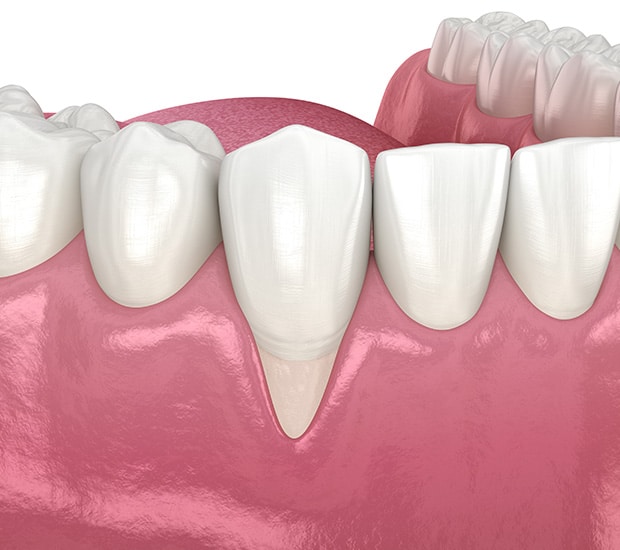
Understanding Gum Recession

Gum recession refers to the phenomenon of the gums receding or pulling away from the teeth. Though generally associated with older patients, gum recession can affect patients of all ages, no matter how well they take care of their teeth. Gum recession can cause aesthetic concerns and negatively affect the functionality of the teeth.

Gum tissue should ideally fit snugly around each tooth. With gum recession, however, the gum tissue pulls away from the tooth and leaves the tooth root exposed. As the root surface is not protected by a hard enamel covering, it may now be at an increased risk of decay. If left untreated, gum recession will eventually damage the supporting tissue and bone structures of the teeth, potentially leading to tooth loss.

Symptoms of Gum Recession

It is not uncommon for gum recession to have a subtle onset, even going unnoticed until the condition has already progressed. The most apparent signs of gum recession are the aesthetic changes that follow. These include exposed tooth roots and visibly shrinking gums. Other symptoms, however, include:

  • Bad breath
  • Gums that bleed after brushing or flossing
  • Loose teeth
  • Pain at the gum line
  • Red, swollen gums

At this point, patients may express concerns about their appearance or even potentially losing teeth. Exposed tooth roots may also make teeth particularly sensitive to cold and heat.

Causes of Gum Recession

Even patients with good oral hygiene can experience gum recession. Several factors may contribute, including aggressive toothbrushing, body piercing, clenching or grinding teeth, crooked teeth or a misaligned bite, hormonal changes, insufficient dental care, periodontal disease, and tobacco use. Genetics may also play a role — those with weak, thin gums seem to be likely to pass it onto their children.

Gums can also recede only on one side, usually because plaque has concentrated in that particular area of the mouth. In such cases, the patient may have neglected oral hygiene on the other side of the mouth, allowing excess plaque and bacteria at the gum line to release toxic substances that destroy gum tissue. Another possible explanation is that a misaligned bite may put more stress on one side of the mouth than the other. The same reasoning may apply for gum recession on only one tooth. Physical trauma may also be a factor.

Treating Gum Recession

In its earliest stages, gum recession can sometimes be mild enough not to need professional treatment. If the condition has progressed, however, several treatment options are available. These involve:

  • Composite restoration – A popular option because it looks natural while covering the tooth root's surface and closing any black gaps between the teeth
  • Desensitizing agents – Lessen the nerve symptoms, making it easier to brush sensitive teeth
  • Dentin bonding agents and varnishes – Help reduce the exposed tooth root's sensitivity
  • Orthodontics – A long-term treatment that moves teeth slowly over time to correct alignment issues
  • Pink porcelain or composite – Matched to the color of the gums and applied to the gaps to reduce the appearance of receded gums
  • Removable gum veneers – Usually made of acrylic or silicone, these operate similarly to pink composite
  • Surgery – More severe cases of gum recession may necessitate surgery, most commonly a gum graft

Preventing Gum Recession

Good oral hygiene is the first line of defense against gum recession. Individuals should brush at least twice daily with a soft-bristled toothbrush, using a fluoridated toothpaste and mouthwash approved by the American Dental Association (ADA). Flossing nightly will also prevent any plaque buildup. As many patients have issues with either under- or over-brushing their teeth, they may want to consult with their dentist on proper technique.

Making healthy lifestyle choices, such as eating a well-balanced diet and avoiding tobacco use, can also dramatically lessen one's chances of gum recession. Patients must address any signs of gum recession as soon as possible, as exposed tooth roots can quickly decay and require various expensive and painful procedures. Additionally, many symptoms of gum recession overlap with undetected, worsening gum disease. Making regular dental visits is crucial, as a periodontist can recognize the signs of gum recession before it has a chance to become problematic.

Gum recession can quickly become problematic for even the healthiest of patients. Our team at Hudson Dental Center may be able to help.

How it works
01

Comprehensive Examination

We carefully assess the extent of your gum recession, identify the underlying causes, and check for any signs of periodontal disease or other contributing factors.

02

Personalized Treatment Plan

Based on your examination, we recommend the most appropriate treatment option—from conservative approaches like desensitizing agents to more advanced solutions like composite restoration or gum grafting.

03

Gentle Treatment

We perform your chosen treatment with care and precision, ensuring your comfort throughout the process and protecting your tooth roots from further damage.

04

Prevention & Maintenance

We provide guidance on proper brushing technique, oral hygiene habits, and lifestyle changes to prevent future gum recession and maintain your results.

Common questions
Can gum recession happen even if I brush regularly?+

Yes. Gum recession can affect patients of all ages, even those with good oral hygiene. Factors like aggressive brushing, genetics, teeth grinding, misaligned bite, and hormonal changes can all contribute to gum recession regardless of how well you care for your teeth.

Will I need surgery to treat my gum recession?+

Not necessarily. In its earliest stages, gum recession may not need professional treatment. If it has progressed, we offer several non-surgical options including composite restorations, desensitizing agents, and bonding agents. Surgery, such as gum grafting, is typically reserved for more severe cases.

Why are my gums only receding on one tooth or one side?+

Gum recession can occur on just one tooth or one side of the mouth. This often happens when plaque has concentrated in that particular area, or when a misaligned bite puts more stress on one side. Physical trauma can also be a factor. We'll examine your mouth to determine the specific cause.

Get in touchWest New York, NJ

Ready when you are — let's get you smiling.

New patients are always welcome. Give us a call, and we'll find a time that fits — gentle care, honest answers, no pressure.

  • No-pressure, unhurried first visit
  • We file your insurance for you
  • Same-day emergency appointments
  • Easy online booking, day or night
Call (201) 662-1922Contact us